
NAD+ Research Overview: Cellular Metabolism & Aging Studies

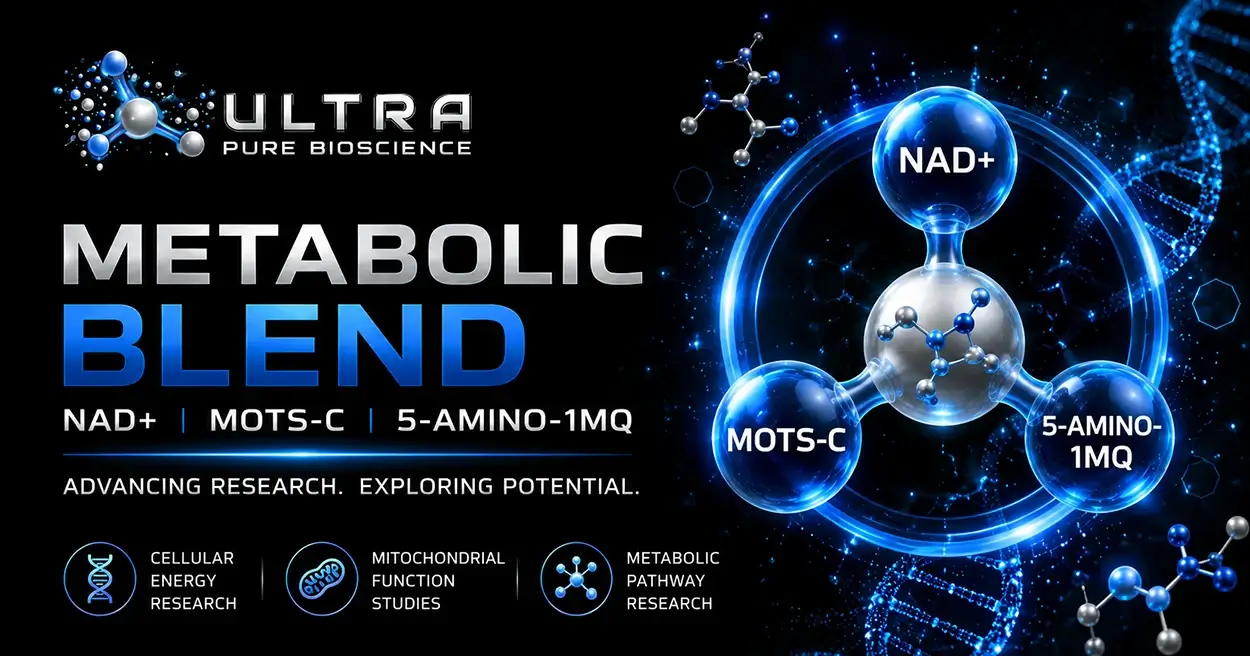
NAD+ Research Overview: Cellular Metabolism & Aging Studies
NAD+, short for nicotinamide adenine dinucleotide, plays an important role in cellular biology. Researchers study NAD+ because it participates in cellular metabolism, mitochondrial activity, redox reactions, DNA repair pathways, and aging-related biological processes.
This article provides a research-only overview of NAD+, including how scientists examine it in cellular metabolism and aging-related studies. This content does not describe NAD+ as a treatment, cure, prevention method, or approved therapy for any disease or medical condition.
What Is NAD+?
NAD+ functions as a coenzyme in living cells. It supports oxidation-reduction reactions, which help cells process nutrients and participate in energy-related biological pathways.
Researchers frequently discuss NAD+ in studies involving metabolism, mitochondrial function, cellular stress responses, DNA repair, and enzyme signaling. Because NAD+ connects to multiple biological systems, scientists continue to examine its role in laboratory, preclinical, and clinical research models.
In simple terms, NAD+ helps researchers better understand how cells manage energy, respond to stress, and regulate important maintenance pathways.
Why Researchers Study NAD+ in Cellular Metabolism
Cellular metabolism includes the chemical processes that allow cells to convert nutrients into usable forms of energy and maintain normal function. Researchers examine NAD+ in this area because it contributes to electron-transfer reactions within metabolic pathways.
One major research focus involves the relationship between NAD+ and mitochondria. Mitochondria support many energy-related cellular processes. NAD+-dependent reactions help researchers understand how cells regulate energy balance, metabolic signaling, and stress adaptation under different experimental conditions.
Researchers also study how NAD+ interacts with enzymes involved in metabolic regulation. These enzymes include:
- Sirtuins
- PARPs
- CD38
- Other NAD+-dependent signaling proteins
These research areas help scientists explore how cells maintain metabolic stability and respond to biological stressors.
NAD+ and Aging Studies
Aging-related NAD+ research focuses on how NAD+ levels and NAD+-dependent pathways may change over time. Some scientific studies examine whether changes in NAD+ availability relate to cellular maintenance, mitochondrial activity, and stress-response pathways in aging models.
Researchers commonly investigate NAD+ in aging biology because it connects to several study areas, including:
- Mitochondrial function
- DNA repair signaling
- Cellular stress response
- Inflammatory pathway research
- Cellular senescence studies
- Metabolic homeostasis
These topics remain active areas of investigation. Scientists still need more data to understand how NAD+ biology may differ across research models, tissue types, study designs, doses, and delivery methods.
Importantly, aging research does not prove that NAD+ reverses aging, prevents aging, or produces specific human outcomes.
NAD+ and Mitochondrial Function Research
Mitochondrial function remains one of the most common areas of NAD+ research. Since mitochondria participate in energy-related cellular activity, researchers often examine how NAD+ availability may influence mitochondrial signaling and metabolic regulation.
Scientists rarely study NAD+ as an isolated molecule. Instead, they usually examine NAD+ alongside related enzymes and pathways. These may include sirtuin activity, PARP-related DNA repair mechanisms, and CD38-related NAD+ metabolism.
This research helps scientists explore how cells regulate energy balance, manage stress, and maintain biological function under controlled study conditions.
NAD+ and DNA Repair Pathway Studies
Researchers also examine NAD+ in relation to DNA repair pathways. Cells regularly encounter internal and external stressors that can affect DNA integrity. Some DNA repair-related enzymes use NAD+ during cellular response processes.
For example, researchers often discuss PARP enzymes in NAD+ studies because these enzymes interact with NAD+ during DNA damage-response signaling. In this context, NAD+ research helps scientists explore cellular repair pathways and stress-response mechanisms.
This area of study remains complex. Current research does not show that NAD+ prevents, treats, or cures DNA-related diseases or medical conditions.
NAD+ Precursors vs NAD+
Many NAD+ research discussions also include NAD+ precursors. These compounds contribute to NAD+ biosynthesis pathways under certain experimental conditions.
Commonly discussed NAD+ precursors include:
- Nicotinamide riboside
- Nicotinamide mononucleotide
- Niacin
- Nicotinamide
Researchers study these compounds because they may influence NAD+ metabolism in specific models. However, biological responses can vary depending on the research model, dose, route of administration, study duration, and experimental design.
Scientific interest in NAD+ precursors does not equal approved medical use. Researchers must continue to evaluate these compounds carefully before making conclusions about human relevance.
Key Research Areas Involving NAD+
Researchers investigate NAD+ across several major scientific categories.
Cellular Energy Research
Scientists examine NAD+ because it participates in cellular energy pathways and redox balance.
Mitochondrial Research
Researchers study NAD+ in relation to mitochondrial signaling, metabolic regulation, and energy-related cellular processes.
Aging Biology Research
Scientists explore NAD+ in aging models because NAD+-dependent pathways appear in studies of cellular maintenance, stress response, and metabolic regulation.
DNA Repair Research
Researchers examine NAD+ in connection with enzymes involved in cellular repair signaling and DNA damage-response pathways.
Metabolic Pathway Research
Scientists include NAD+ in studies of nutrient sensing, metabolic homeostasis, and energy balance.
What Current NAD+ Research Does Not Prove
For responsible and compliant communication, researchers and educational websites should clearly separate scientific interest from approved medical claims.
Current NAD+ research does not prove that NAD+:
- Treats aging
- Reverses aging
- Cures disease
- Prevents disease
- Guarantees improved energy
- Guarantees improved metabolism
- Produces specific health outcomes in humans
- Replaces medical care or professional treatment
Research findings should remain within the limits of the study design, model, and available evidence.
Why NAD+ Remains a Popular Research Topic
NAD+ remains a popular research topic because it connects to several major biological systems. Its role in metabolism, mitochondrial signaling, cellular stress response, and DNA repair makes it highly relevant in laboratory and translational research.
However, popularity does not establish clinical proof. Scientists still need more research to understand NAD+ biology across different models, populations, delivery methods, doses, and long-term study conditions.
For this reason, educational content should describe NAD+ as a research topic, not as a guaranteed solution for health, aging, energy, or metabolic outcomes.
Research-Only Summary
NAD+ plays an important role in cellular metabolism, mitochondrial activity, DNA repair signaling, and aging-related biology. Researchers continue to examine how NAD+ availability and NAD+-dependent enzymes influence cellular function under controlled experimental conditions.
Current NAD+ research remains active and developing. Readers should interpret findings carefully and avoid treating research interest as proof of medical benefit.
Suggested Internal Links
Use these if they match your website structure:
- Shop Research Products:
/product-category/view-all/ - Metabolic Research Category:
/product-category/metabolic-research/ - Peptide News & Updates:
/category/peptide-news-updates/ - MOTS-C Research Article: link when published
- 5-Amino-1MQ Research Article: link when published
Suggested Featured Image Alt Text
NAD+ research concept showing cellular metabolism, mitochondrial function, and aging study pathways in a laboratory-style design
FDA-Compliant Disclaimer
Disclaimer: This content is for educational and research purposes only. The information does not diagnose, treat, cure, or prevent any disease or medical condition. The NAD+ research discussed in this article relates only to scientific and laboratory research contexts. Any products or compounds mentioned should only be used as labeled and are not intended for human consumption unless approved for that use by the appropriate regulatory authorities. Always consult a qualified professional for medical, health, scientific, or regulatory guidance.