

Peptide Lyophilization Process: How Freeze-Dried Peptides Are Made for Research Use

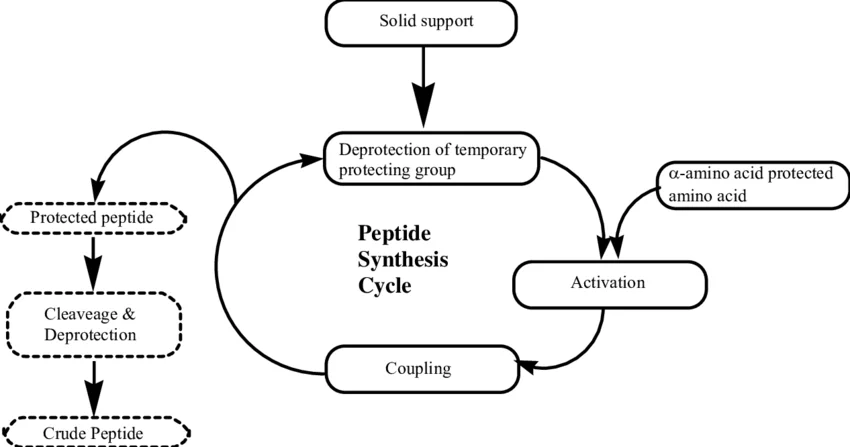
1. Peptide Synthesis

  • Peptides are synthesized using solid-phase peptide synthesis (SPPS) or liquid-phase synthesis, depending on the length and complexity of the peptide.
  • After synthesis, peptides are purified to remove any synthesis-related impurities, typically through high-performance liquid chromatography (HPLC).

2. Preparation for Lyophilization

  • The purified peptide is dissolved in a suitable solvent, often a mixture of water and acetic acid, to form a solution.
  • The solution may be filtered to ensure purity, removing any particulate matter that could interfere with the drying process or the peptide’s activity.

3. Freezing

  • The peptide solution is rapidly frozen to create a solid state, which is essential for lyophilization.
  • Freezing can be done at very low temperatures (usually below -40°C) to ensure all water and solvents are solidified.
  • Proper freezing creates a stable matrix for the peptide, preserving its structure and preventing degradation. 

4. Primary Drying (Sublimation)

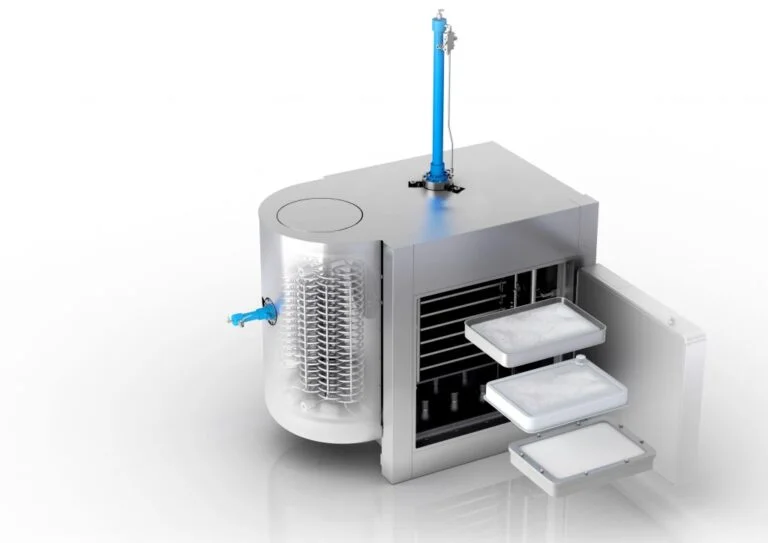
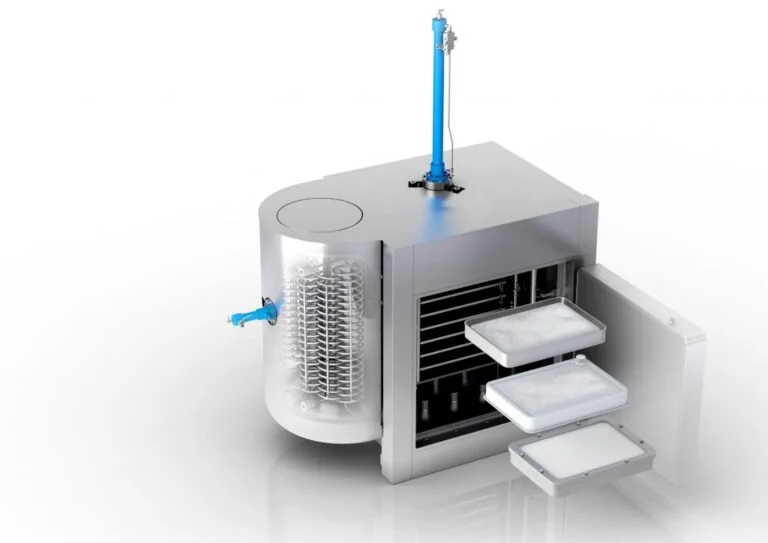
  • In a vacuum, the frozen solvent is removed by sublimation, directly converting ice into vapor without passing through the liquid phase.
  • Controlled low temperatures and pressures prevent the peptide from denaturing and maintaining its integrity.
  • This step removes most of the water content, but the process is kept slow to prevent the peptide’s structure from collapsing.

5. Secondary Drying (Desorption)

  • The temperature is gradually increased under continued vacuum to remove any residual, tightly bound water molecules.
  • This step further reduces the moisture content, typically below 1-2%, which is ideal for storage stability.

6. Sealing and Storage

  • The freeze-dried peptide, now in powder form, is sealed in an inert environment (often under nitrogen gas) to prevent moisture absorption.
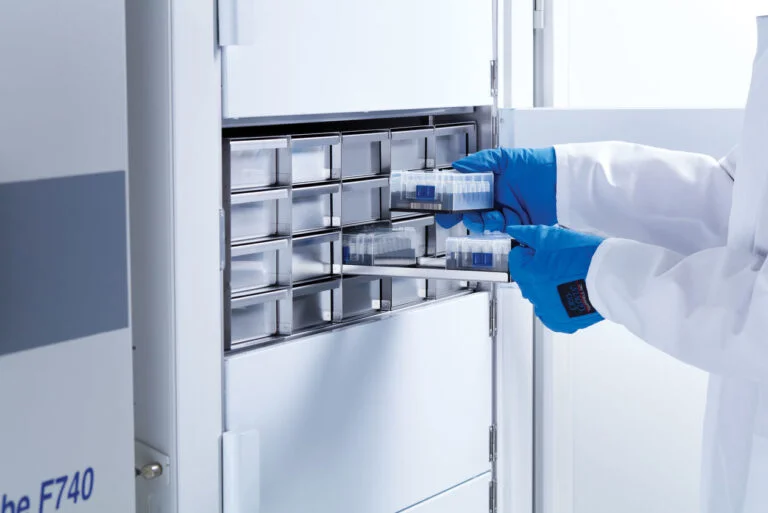
  • Peptides are usually stored at low temperatures to maintain their stability over extended periods.

This freeze-drying process results in a stable, powdered peptide product that can be reconstituted with a suitable solvent when ready for use, making it easier to handle, store, and transport while preserving efficacy.

Don't see what you are looking for?